
AI is changing so fast, and so is FromThePage.
Here’s a look at the AI features we currently offer.
We recently hosted a webinar by our friend Jon Ippolito from the University of Maine's New Media program. We'd been looking for resources on how to evaluate and judge energy usage by LLMs since last summer's SAA panel questions started with a pointed "question" on the ethical use of AI, given the energy consumption. Jon has done the most on gathering and evaluating the available data on energy use and how it differs by location, energy source, and task.
If this is something you're curious about, I'd encourage you to watch Jon's webinar, here:

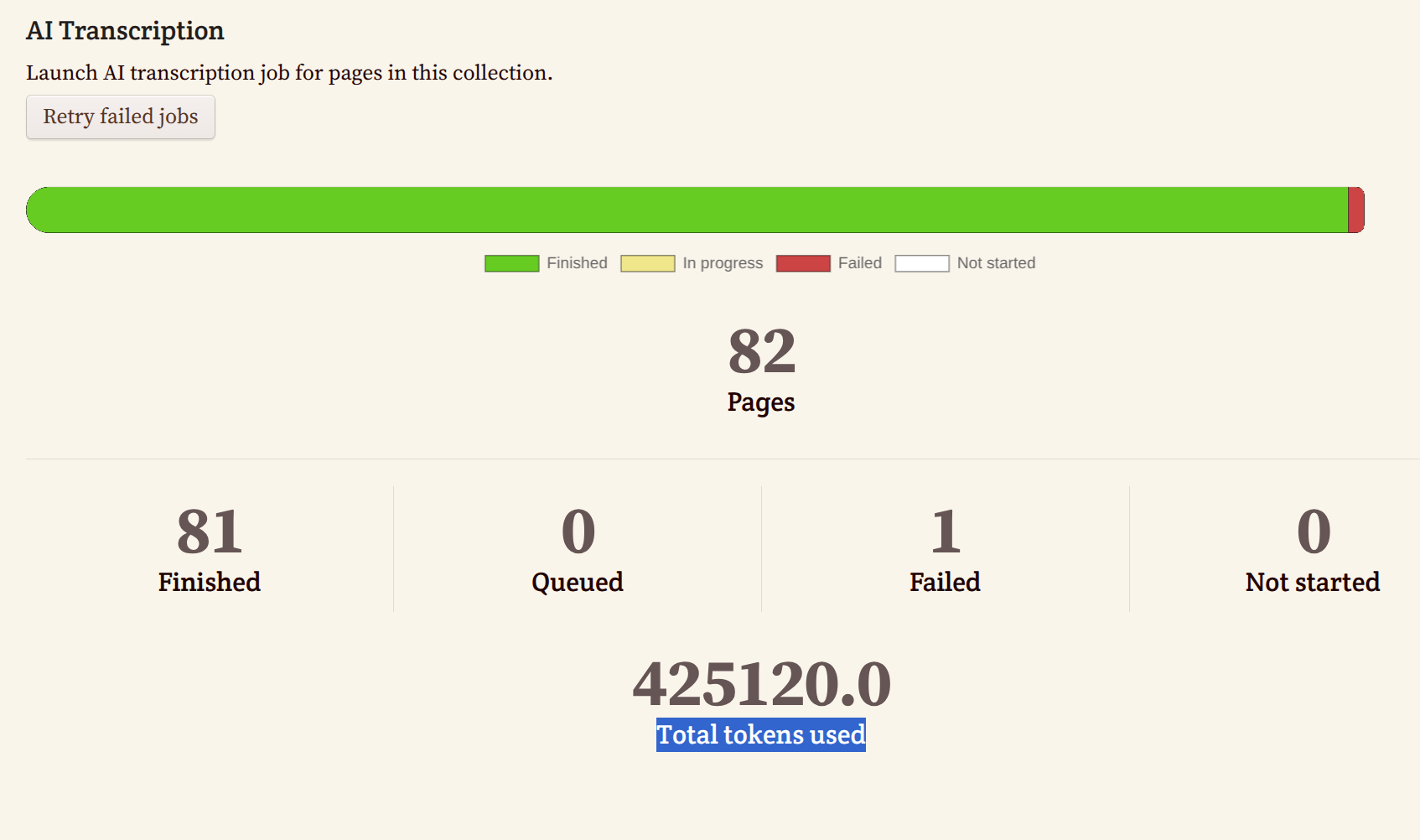
Since we run a software platform that is using AI (optionally!) to provide draft transcriptions, we were inspired to add our token usage to each page and collection, documenting our energy use through the best proxy we have: token count.
We’re showing the token counts used in processing each page, broken down by type:

And then rolling up all the tokens used in a collection on the AI Settings page:
Since you may not run a software system, you may be looking for “what can I, personally, do?” Here's some practical, actionable steps from Jon & his team:
- Optimize your prompts: Be concise, use "temporary chat" modes, and avoid AI for simple factual queries where a traditional search might suffice.
- Advocate for transparency: Support legislative efforts like Maine’s LD 912, which promotes data center energy accountability.
- Get involved: Explore tools like What Uses More and the CollaborAITE platform prototype, which aims to provide users with real-time analytics regarding the environmental impact of their AI workflows.
We’d all like a more mindful, transparent approach to technology. As Jon notes, we don't need to fear AI, but we do need to be more conscious of how our digital habits ripple out into the physical world.