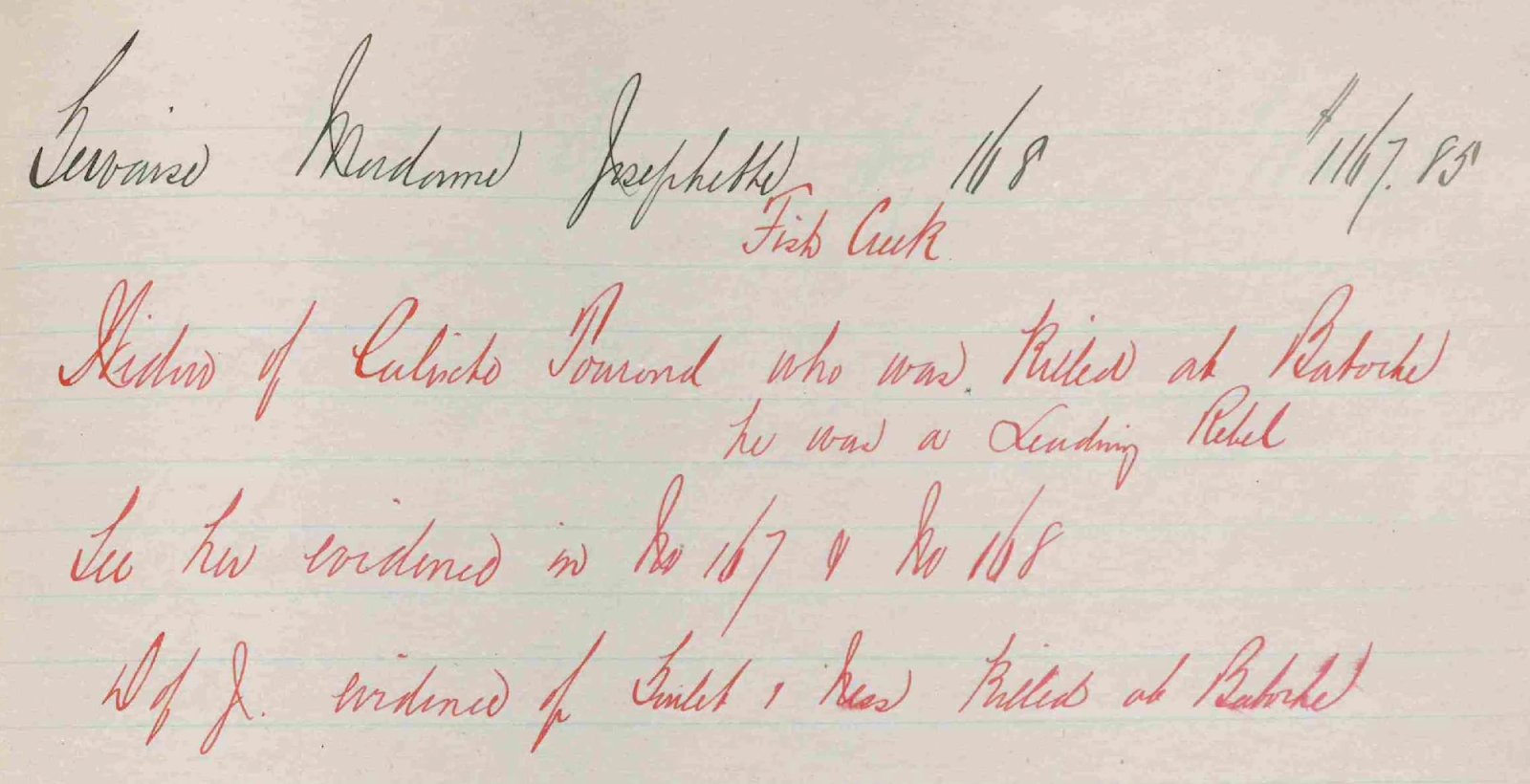
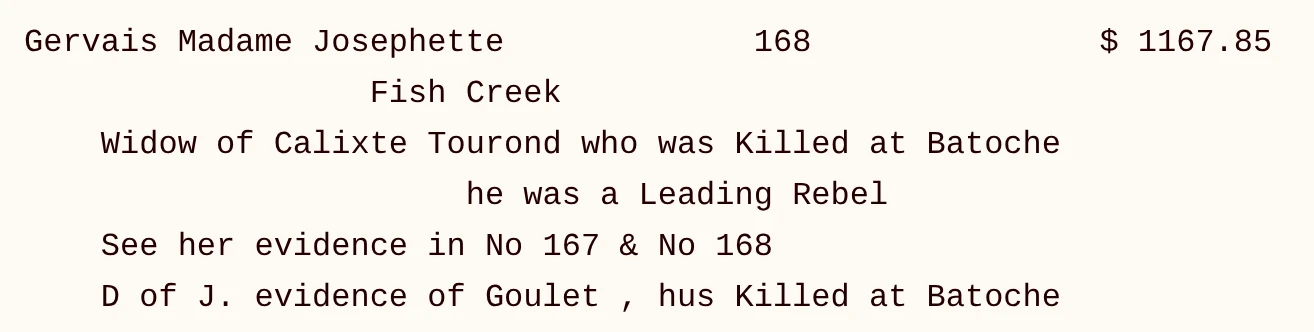
I stumbled across something interesting during a live demo in yesterday's webinar. Not having anything prepared, I tried a page in the Queens University Archives' Riel Resistance Collection. The hand was extraordinarily difficult for me, even though it was late 19th-century North American script.
The personal names were nearly indecipherable, as they were French names I hadn't encountered before, although the document was in English. Since QUA had run Gemini on the collection, we tried using that as an AI Draft, and were pretty pleased with the results. Nothing new there.
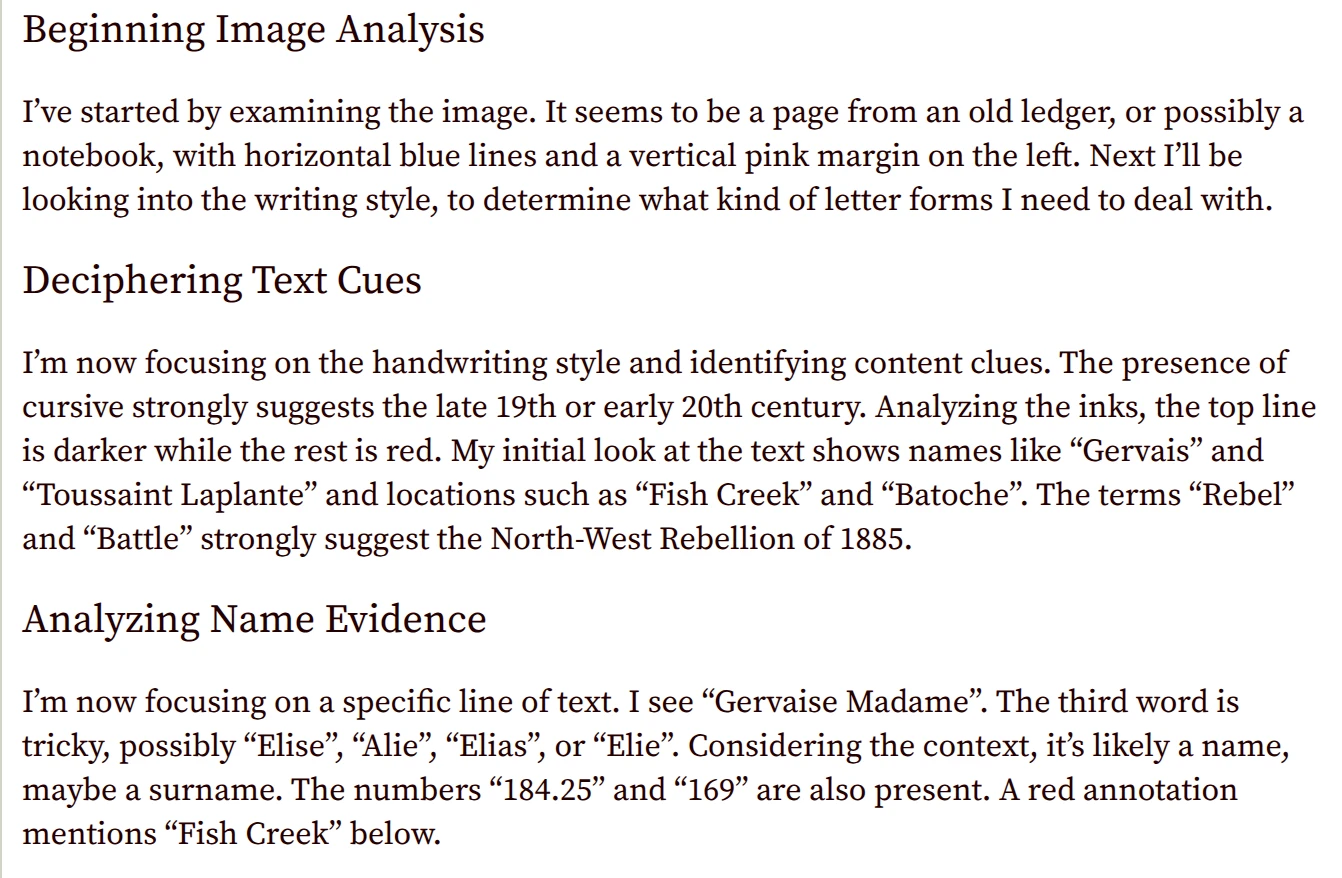
One line in the reasoning produced by Gemini was fascinating:
My initial look at the text shows names like “Gervais” and “Toussaint Laplante” and locations such as “Fish Creek” and “Batoche”. The terms “Rebel” and “Battle” strongly suggest the North-West Rebellion of 1885.
Mark Humpries and @foundhistory.bsky.social have written about Gemini "checking the math" in account books, implying that it has a kind of model of reality it uses while it transcribes. This seems like a further step: the transcription process is connected to a model of history, situating a page within what it "knows" about world history. It’s interesting to note we did not provide any context for the image in our API call--it used the same prompt we use for any other page image on FromThePage, and it did not have previous page transcription outputs in its context window.
Has anyone else seen Gemini explicitly reference historical events to provide context to a transcription process?